Canine Bloat
April 29, 2026 · Dogs

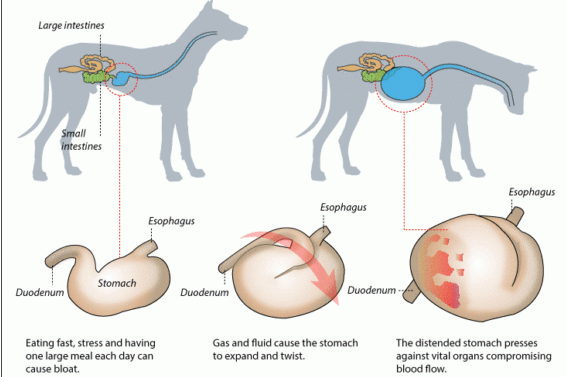
Gastric dilation-volvulus (GDV), also known as bloat, occurs when a dog’s stomach becomes blocked, and gas and fluid accumulate, causing the stomach to stretch to many times its normal size. The bloated stomach causes severe pain, and it is prone to twist. When the stomach twists, all of its contents become trapped and the blood supply is cut off. Without blood flow, the stomach quickly deteriorates, and, because it is so distended, it can compress the large vessels that return the blood back to the heart and cause a shock to the circulatory system.
Without treatment, GDV is a fatal condition. A dog with bloat may only have an hour or two to live.
Dog Breeds With High Risk of Bloat:
Large-breed and deep-chested dogs are at the highest risk of developing bloat. Predisposed breeds include:
Great Danes
Standard poodle
Irish setter
Irish wolfhound
Akita
German shepherd
Weimaraner
Saint Bernard
Boxer
Dogs with direct relatives that have a history of GDV are also at increased risk.
A dog’s eating habits can also increase bloat risk—those who eat quickly, eat from raised bowls, or eat a single large meal each day are more likely to bloat. Feed your dog at least two smaller meals per day and avoid feeding from elevated bowls. Use food puzzles to encourage your pup to slow down while eating.
Signs of bloat in dogs
GDV is extremely painful, and the pain occurs suddenly and without warning. A dog may seem normal one minute, and then may suddenly exhibit the following signs:
Pacing
Agitation
Frequent, usually unproductive, attempts to vomit
Distended abdomen (although deep-chested breeds may not show this sign)
Why is bloat an emergency?
GDV is a medical emergency, so the veterinary medical team will immediately begin IV fluids and work to manage your dog’s pain. Abdominal x-rays are the most reliable way to assess stomach position and diagnose bloat. Stabilization of the patient and diagnostics must be performed immediately. These dogs require pain medication and intravenous fluids. Surgical intervention is a necessary step in the treatment of bloat and should be done as soon as the patient is stable enough to undergo anesthesia and surgery.
During a bloat circulation can be compromised and other abdominal organs, such as the spleen or intestines, may be affected, as a result the spleen may also need to be removed in some cases. Bloat, requires a multiple day stay in the hospital for post-operative care and recovery. If not treated by a veterinarian immediately, bloat can be fatal. Most dogs who are diagnosed and treated early in the development of bloat recover from surgery and can lead a normal life.
The surgery consists of de-rotating the stomach back to its normal position and then tacking it to the body wall. This is called a gastropexy. If the spleen was involved in the twisting, then it may have to be removed as well. Even after the surgery is performed these dogs are not out of the woods. There are many complications that can still arise after surgery and it is very common for these dogs to be in the hospital for multiple days. As many as 15-30% of dogs will not survive bloat even with immediate care and surgery.
What Happens During Surgery
Once stabilized, your dog will be ready for surgery. During the emergency surgery, the veterinary surgeon will:
De-rotate the stomach to return it to its normal position
Tack the stomach to the body wall (a procedure called gastropexy) to prevent it from twisting again in the future
Assess the stomach and spleen for damage from lack of blood flow
Remove damaged tissue, if necessary—in some cases, part of the stomach or the entire spleen may need to be removed if the blood supply was cut off for too long
Recovery and Prognosis
GDV in dogs often requires intensive post-surgery care. The veterinary team will monitor them closely for complications related to shock and ensure they’re recovering properly.
The good news: Dogs treated early in the course of GDV have the highest survival rates. Every minute counts with this condition, so the sooner the stomach is decompressed and de-rotated, the better the outcome and the lower the risk of permanent damage or severe complications.